A New David McWilliams Struggles to be Born; Now is the Time of Substacks

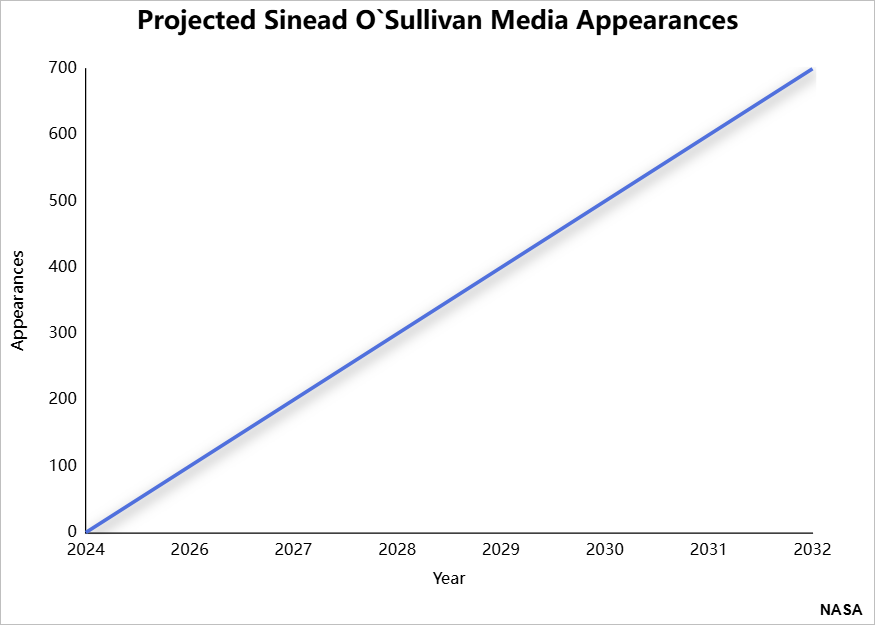
I have written about the problem of David McWilliams before, so I feel I must step in before the new version ends up ruining the country too. Sinead O’Sullivan, a systems economist, might be our new David McWilliams. Since her Substack piece about the fuel protests, ‘Mind the Gap’, went viral, she has been everywhere on Irish media, including on McWilliams’ own podcast. Her narrative that Ireland is a rich country which acts like a poor country clearly has a lot of admirers in our media establishment. It is said that she speaks for our graduate diaspora abroad, (as if we needed to hear anymore from them, there are about four columns in Irish Times devoted to how great it is that you can drink on the street in Berlin or whatever). ‘Ireland’, she tells us, ‘treats its budget like a household that earns well and spends it all at the pub’. Unfortunately, O’Sullivan, an aerospace engineer who worked for NASA, does not understand the country she writes about.
For someone so concerned about how we are a rich country which acts poor you’d think she would be interested in how we got here. O’Sullivan, an MIT researcher on national security, grew up in the north and is one of those strange northern catholics who identifies as ‘Northern Irish’. Despite this she has little interest in the separate economic conditions of the statelet. (Perhaps because the definitive text has already been written, ‘Neglect in the North of Ireland, by Odrán de Bhaldraithe).
She now lives ‘between Boston and London’ (The Azores? Greenland?). Her only first-hand knowledge of the south is from when she lived in Dublin for fourteen months after university. It appears that O’Sullivan, the Head of Strategy at Harvard Business School, has never heard of the property crash, the bank guarantee, the bailout or the loss of economic sovereignty which followed it. It may come as a shock to her that the reason the country looks the way it does is because of one of her friends in the media, David McWilliams.
On the night of the bank guarantee in 2008, with Anglo Irish Bank about to collapse and the rest of the banking system about to go down with it, the government reached for what was widely known as ‘The McWilliams Option’. This was the idea that the Irish state would guarantee all the liabilities of the Irish banks. This ultimately resulted in Ireland being unable to borrow from the bond market, and the Troika (the IMF, the ECB, and European Commission) coming in with a bailout.
Within a couple of years of being a newly wealthy country, Ireland was bankrupt and living under harsh austerity imposed from Europe. Ireland exited the bailout in 2013 but its legacy lives on. The complete shut down in home building by either the state or private developers led directly to the housing crisis. Most capital spending was paused, and we were left with a political class which is terrified of committing to any big project because it fears that, at some point, our current prosperity will come to an end again. O’Sullivan, a Presidential Fellow of the Irish Academy of Engineering, has never mentioned this in her many media appearances, least of all with McWilliams himself.
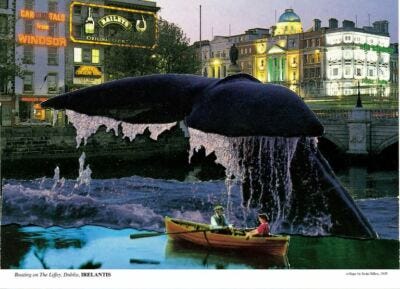
It isn’t mentioned in her ‘Mind the Gap’ piece either. I should know, I had to read it to write this. A classic of the Substack economics genre, littered as it is with graphs and pieces of art which are intended as vague allusions to the work itself, it went viral as an explanation for the fuel protests, a blockade by small business owners which ended after additional supports for those small businesses were announced. O’Sullivan, a space and defense economist and investor, does not understand the protests or the protestors. She asserts that the protests were about ‘the nothingness we live in’ (she uses ‘we’ throughout the piece even though she is not talking about her neighbours over in ‘between Boston and London’). They were about ‘the schools with no places, the pubs that close before midnight’. Other than the fact the leaders of the protests were in those same pubs every night before going back to city centre apartments and hotels, those were clearly not the issues. The leaders of the protests were clear from the beginning that the protests were about the costs of doing business, and, it has to be emphasised, the protests ended as soon as those costs were addressed by government handouts.
O’Sullivan, whose advisory work spans governments, central banks, financial institutions, and public institutions across the United States, UK and EU, was one of the many who got tricked by the accents of the men involved into believing that the fuel protests were a working class movement. This is a phenomenon I have identified before as ‘The Munster Rugby Effect’, the idea that there is no rural elite, that anyone from outside Dublin is a farm labourer living hand to mouth. She draws what she thinks is a contrast between: ‘The farmer who blockades Whitegate causes three days of disruption and it is front-page news. But the middle-class exodus to private healthcare has been degrading the public system for 30 years.’ It may be surprising to her, but I would imagine that the agricultural contractor with a large turnover and leases on heavy machinery also has health insurance, the fact that his wife probably made him get it doesn’t make it any less true.
She goes on: ‘Ireland found a way to be rich without ever needing to develop itself, believing that “tax revenue” meant “prosperity”. The farmers on O’Connell Bridge and the nurse emigrating to Melbourne are both living inside the consequences.’ The state and the private sector both stopped developing anything at all after the bailout, but these are separate cases. The nurses are affected by the difference between housing costs and graduate wages, the agricultural contractors on O’Connell Street suffered a short term pain due to the rising fuel prices caused by the war in Iran. O’Sullivan, as an aside, was deeply impressed by the June war on Iran which led directly to the current situation, and said in 2025:
‘This wasn’t just a strike — it was a strategic message.
To Iran: You’re not safe, no matter how deep you bury your program. To China & Russia: The U.S. can still project force, alone, without staging bases.’
The agricultural contractors resumed business after the government paid out, the nurses are still gone, Iran is stronger than ever, and Sinead O’Sullivan for some reason is everywhere.
She lauds the fuel protestors for their robust tactics, as opposed to the other ineffectual Irish movements:
‘We march for Gaza, we march for Repeal, we march for marriage equality, we hold vigils for asylum seekers, etc etc. These are protests on behalf of others, or for abstract principles, or against injustices happening somewhere else. They are deemed acceptable because they are selfless, and occur in a way such that nobody’s daily life is disrupted while nobody loses out.’
Again, I have to question the use of ‘we’ here from our Harvard correspondent. Anyone living in the country would have noticed the school secretaries strike in September, or the ambulance strikes last week. These were disruptive strikes, but they appear to have slipped her attention because they didn’t involve expensive machinery. I’m not sure if she knows this either, but the fuel protests actually occurred at the least disruptive time possible, during the Easter school holidays (unclear if Harvard Business School was off or not), and were removed without objection the weekend before the schools reopened. Various movements from Palestinian marches to Debenham’s workers have tried similar direct action in the past and were dealt with immediately and with force. It is likely the fuel protesters would be removed much quicker if they tried it again, having proved that they don’t have the stomach for the fight and will fold at the first hint of damage to their expensive machinery. Of course, they won’t do it again because they got what they wanted.
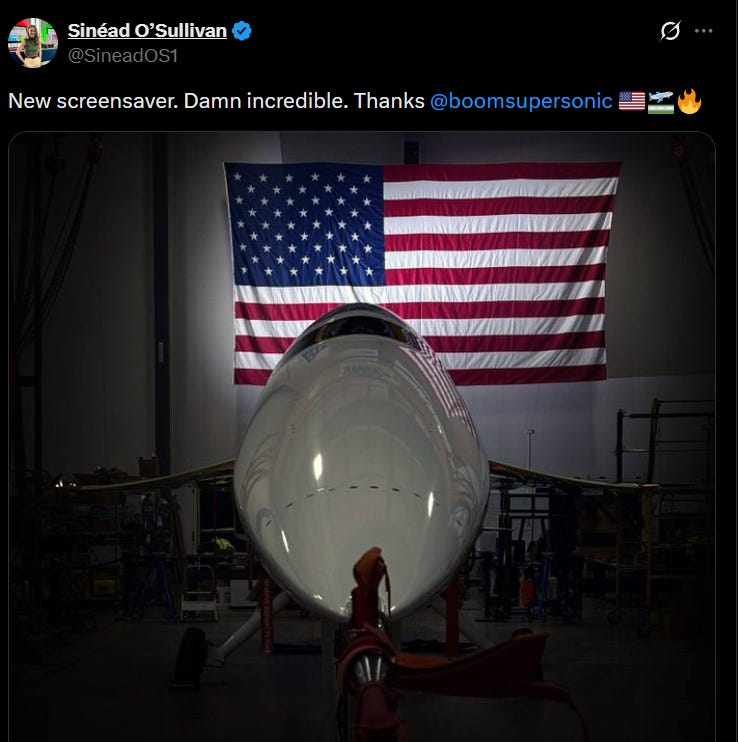
O’Sullivan, who worked as an engineer for the US Navy, contrasts the radical fuel protestors with the comfortable middle class repeal marchers who keep reelecting the government.
‘However the compliant ones are the ones who ensure nothing ever changes, because their silence is the permission the Irish state needs to continue. And continue it does, one FF and one FG vote at a time’
One of the reasons the fuel protests had such an impact was that the leaders of the protesters were mainly FF and FG voters. The Garda response was slow and the budgetary response was fast precisely because these were men who had the phone numbers of ministers, who were known by name by their local TDs, many of them admitted to voting for FG or FF in the last election. Clearly they weren’t aware of Sinead O’Sullivan last year when they were voting. It was an establishment disagreement, much like the debate over signing up to the Mercosur trade deal, and any political benefit will go to Independent Ireland, a sort of holding pen for former Fianna Fáilers from rural Ireland. She blames the Irish government for making her discuss the protests (what did they make of it at Harvard? I’m sure we’ll find out).
‘That this emotional labor was necessary at all is itself a tax on us; an invisible, unacknowledged tax on the time, energy, and goodwill of a population…..The entire discourse of the last week? Wow, it’s the damn gap again!’
O’Sullivan is clearly a busy person with, apparently, a variety of roles across academia and the military industrial complex. She is the founder of ‘Security Ireland’, a thinktank focused on defence spending in Ireland. Its website hopefully tells potential investors that: ‘Ireland’s non-alignment is a policy choice — there is no constitutional provision, no treaty obligation, and no international legal status requiring Ireland to be neutral.’ It promises to show potential investors ‘how the money flows, where the opportunities are, and what you need to know before writing a cheque.’ A cynical interpretation would be that all this guff in the media about lack of investment in Irish infrastructure is actually a veiled demand for more defence spending.
If we are forced to continue to listen to this posturing, the least she can do is learn the recent history of the country . The reason for her beloved gap, aside from the legacies of colonial occupation and the poverty in Ireland, is the bailout. This gap, between Ireland and the other ‘comparable European countries’ which she loves to invoke, is partly because we saved their banks through post-crash austerity, tax increases, and pay cuts imposed on Irish workers. Now we have another member of the absentee commentariat telling us instead that it is because of some flaw in paddy’s genes. At least McWilliams lives here, and he isn’t connected to the arms industry.
Excellent post. Amazing that O'Sullivan gets such an uncritical reception. Our media is a small community and the same faces keep popping up. Keep up the excellent substacks.
Excellent piece….thank you for joining the dots.
Great graph too 😂